
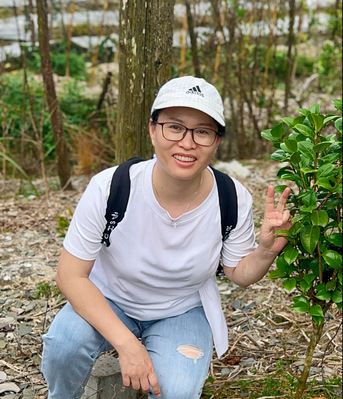
职称职务: 教授
电子邮件: llmin@qztc.edu.cn
联系地址: 资源与环境科学学院
个人简历
2025.12 - 至今 泉州师范学院 教授
2019-2025 泉州师范学院 副教授
2016-2019 厦门大学化学化工学院 博士后研究人员
2012-2016 中国科学院城市环境研究所 博士
2006-2009 中国科学院华南植物研究所 硕士
2002-2006 武汉轻工大学 学士
研究兴趣
1.功能化纳米纤维膜的制备及其对水体中无机砷的吸附去除研究
采用高压静电纺丝技术,将功能化壳聚糖溶液制备成具有高比表面积的纳米纤维膜,经碱处理、水洗和干燥后,获得一种新型有机-无机复合纳米吸附剂材料,用于水体中无机砷的高效吸附去除。
2.基于液液界面的动态印刷技术研究
传统基于固固或固液界面的印刷技术通常存在工艺复杂、能耗高、对界面浸润性要求苛刻、成本高等问题。液体的流动性与界面粘弹性为开发基于动态液液界面的低成本印刷技术提供了新思路。本项目通过调控互溶液体之间的动态液液界面,成功突破了浸润性壁垒,实现了一种稳定且高度可控的转移印刷与材料制备同步进行的新技术。所制备的复合材料具备功能多样、抗腐蚀、表面无瑕疵等优异特性。
3.环境功能微生物及其健康效应研究
聚焦典型区域环境,开展微生物资源的挖掘与功能解析,系统研究微生物代谢活性与环境健康之间的内在关联,揭示微生物功能在生态系统与人体健康中的调控作用。
代表性论文
1. Min, L., Wang, S., Li, Y., Lin, Y., & Chi Y. (2026). Chitosan-Based Adsorbents: A Versatile Platform for the Removal of Arsenate and Copper Ions from Water. Nanomaterials, 16(8), 458.
2. Min, L., Chi, Y., Dong, S. (2020). Gut microbiota health closely associates with PCB153-derived risk of host diseases. Ecotoxicology and Environmental Safety. 203, 15,111041.
3. Min, L. L., Yuan, Z. H., Zhong, L. B., Liu, Q., Wu, R. X., & Zheng, Y. M. (2015). Preparation of chitosan based electrospun nanofiber membrane and its adsorptive removal of arsenate from aqueous solution. Chemical Engineering Journal, 267, 132-141
4. Min, L. L., Yang, L. M., Wu, R. X., Zhong, L. B., Yuan, Z. H., & Zheng, Y. M. (2019). Enhanced adsorption of arsenite from aqueous solution by an iron-doped electrospun chitosan nanofiber mat: Preparation, characterization and performance. Journal of Colloid and Interface Science, 535, 255-264.
5. Min, L. L., Zhong, L. B., Zheng, Y. M., Liu, Q., Yuan, Z. H., & Yang, L. M. (2016). Functionalized chitosan electrospun nanofiber for effective removal of trace arsenate from water. Scientific Reports, 6, 32480.
6. Min, L., Pan, H., Chen, S., Wang, C., Wang, N., Zhang, J. & Hou, X. (2019). Recent progress in bio-inspired electrospun materials. Composites Communications, 11, 12-20.
7. Min, L., Chen, S., Xie, X., Dong, H., Pan, H., Sheng, Z. & Hou, X. (2018). Development and application of bio-inspired microfluidics. International Journal of Modern Physics B, 32(18), 1840013.
8. Ling-Li, M., Song-Yue, C., Zhi-Zhi, S., Hong-Long, W., Feng, W., Miao, W., & Xu, H. (2016). Development and application of bio-inspired and biomimetic microfluidics. Acta Physica Sinica, 65(17), 178301.
9. Hou, X., Li, J., Tesler, A. B., Yao, Y., Wang, M., Min, L. & Aizenberg, J. (2018). Dynamic air/liquid pockets for guiding microscale flow. Nature Communications, 9(1), 733.
10. Wu, F., Chen, S., Chen, B., Wang, M., Min, L., Alvarenga, J. & Aizenberg, J. (2018). Bioinspired Universal Flexible Elastomer‐Based Microchannels. Small, 14(18), 1702170.
11. Lin, Y., Min, L., Huang, Q., Chen, Y., Fang, C., Sun, X., & Dong, S. (2015). The combined effects of DEHP and PCBs on phospholipase in the livers of mice. Environmental Toxicology, 30(2), 197-204.
12. Sheng, Z. Z., Liu, X., Min, L. L., Wang, H. L., Liu, W., Wang, M. & Hou, X. (2017). Bioinspired approaches for medical devices. Chinese Chemical Letters, 28(6), 1131-1134.
13. Sheng, Z., Wang, H., Tang, Y., Wang, M., Huang, L., Min, L. & Hou, X. (2018). Liquid gating elastomeric porous system with dynamically controllable gas/liquid transport. Science Advances, 4(2), eaao6724.